Soils around Lake Wendouree differ markedly from those on the volcanic slopes of Mount Clear. The soft, compressible clays near the lake require passive anchor systems with longer bond lengths, while the basalt-derived residual soils on the ridges respond better to active pre-stressed anchors. In both cases, understanding the local geology is the first step. We combine site investigation data with anchor design calculations to match the ground conditions exactly. Before starting, we often recommend a geotechnical study of slope stability when the anchor wall will retain significant cut heights. Our team tailors every anchor layout to the specific soil profile found in Ballarat.
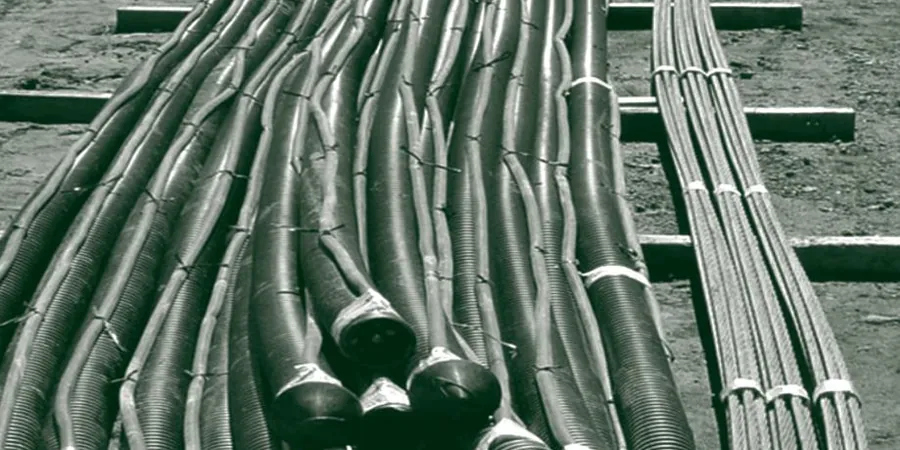
Soil corrosion classification is often overlooked in Ballarat, yet it determines whether an anchor reaches its 50-year design life.
Technical details of the service in Ballarat
Typical technical challenges in Ballarat
In Ballarat we often see anchor failures linked to inadequate bond length in the stiff clay layers that dominate the central suburbs. Many contractors assume the ground is uniform, but the clay here has high plasticity and can creep under sustained load. If the bond zone is placed in a softened zone near an old mine void, the anchor loses capacity over time. Passive anchors are especially vulnerable because they only engage after movement starts, which can exceed serviceability limits. We mitigate this by cross-referencing borehole logs from nearby sites and by adjusting the fixed anchor length according to the actual shear strength profile encountered during drilling.
Our services
We offer the following anchor design services specifically adapted to Ballarat ground conditions.
Active Pre-Stressed Anchor Design
Design of tensioned anchor systems with lock-off loads calculated from soil parameters. Suitable for permanent retaining walls and high-load applications where minimal wall deflection is required.
Passive (Untensioned) Anchor Design
Design of grouted passive anchors that mobilise resistance only after ground movement occurs. Ideal for temporary excavations and low-height walls in cohesive soils around Ballarat.
Corrosion Risk Assessment & Protection Design
Evaluation of soil aggressivity and selection of encapsulation or galvanic protection levels to ensure anchors meet the required design life in Ballarat's variable ground chemistry.
Q&A
What is the difference between an active and a passive anchor?
An active anchor is pre-stressed to a defined load immediately after installation, which actively compresses the ground and limits wall movement from the start. A passive anchor is not tensioned; it only resists load after the wall or slope begins to deflect, relying on the grout-to-ground bond to mobilise capacity. Active anchors are common for permanent walls in Ballarat, while passive anchors suit temporary shoring where some movement is acceptable.
What is the typical cost range for anchor design in Ballarat?
For a standard project in Ballarat, the design and testing component typically ranges between AU$1.540 and AU$5.880 depending on the number of anchor types, corrosion class requirements, and the need for pull-out verification tests. Larger volumes or repetitive anchor patterns reduce the per-unit cost.
How does the historical mining activity in Ballarat affect anchor design?
Old mine workings, particularly beneath the central and southern suburbs, create voids and softened zones that can drastically reduce bond capacity. We require detailed borehole logs to identify any cavities or disturbed ground along the anchor alignment. Where voids are confirmed, we redesign the bond length or relocate the anchor to a deeper, undisturbed stratum.
What site investigation data is needed before starting anchor design?
We need at least one borehole per anchor wall section with SPT N-values, undrained shear strength from triaxial or vane tests, soil classification, and corrosion potential (pH, resistivity, sulfate content). For active anchors, we also require the lateral stress coefficient (K0) to calculate lock-off loads accurately. The more site-specific the data, the safer and more economical the anchor layout.
Coverage in Ballarat
Visual overview
This service complements our laboratory testing work for a complete project analysis.