In Ballarat, we frequently encounter residential and commercial sites where previous mining or earthworks have left variable fill thickness across the allotment. This fill can range from loosely placed clayey spoil to engineered granular layers, making a blanket foundation design risky. Before pouring any slab, we perform a targeted foundations on fill analysis to determine the actual compaction state, moisture sensitivity, and potential for differential movement. Our field crew logs test pits and conducts dynamic cone penetrometer soundings to map fill depth, then we correlate those results with laboratory compaction and collapse tests. This approach, combined with a plate load test under controlled loading, gives the project engineer a clear basis for footing design on filled ground in Ballarat.
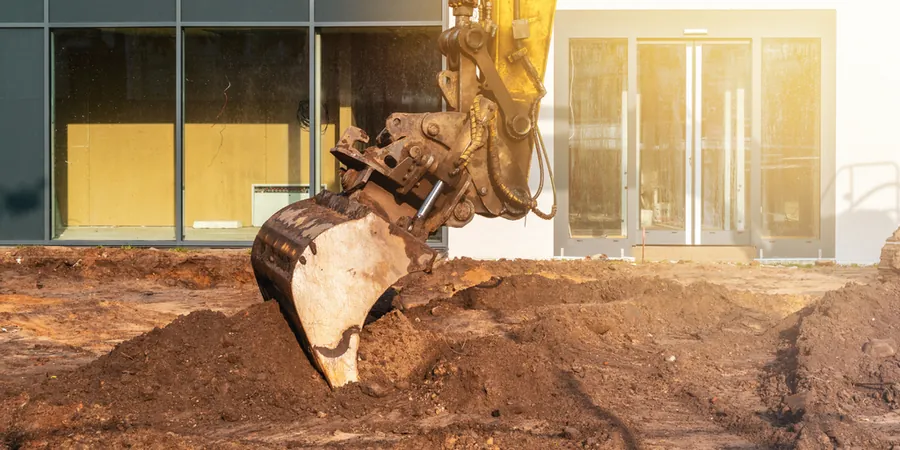
Fill thickness alone doesn't dictate risk – it's the moisture sensitivity and compaction variability that cause most differential settlement cases in Ballarat.
Technical details of the service in Ballarat
Typical technical challenges in Ballarat
A common mistake we see from builders in Ballarat is assuming that because the fill looks firm on the surface, it will perform uniformly under load. That assumption often leads to cracked slabs and jammed doors within the first year. The real risk lies in hidden soft layers or moisture-reactive clays within the fill mass that only become evident after foundation loads are applied. Without a proper foundations on fill analysis, differential settlement can exceed 50 mm in some Ballarat subdivisions, triggering costly remediation. We have documented cases where ignoring the collapse potential of even moderately compacted fill caused structural damage that required underpinning with piles.
Our services
We offer three integrated services for foundations on fill analysis in Ballarat, each tailored to the site complexity and project budget.
Field Investigation & Fill Mapping
Test pits and boreholes logged to AS 1726, with DCP profiling every 0.5 m to identify weak layers. We record fill composition, colour, odour, and any buried organic matter that could affect long-term performance.
Laboratory Compaction & Collapse Testing
Standard Proctor compaction (AS 1289.5.1.1), unsoaked CBR, and collapse potential tests on undisturbed fill samples. Results are compared to target compaction levels specified by the project engineer.
Settlement & Bearing Capacity Analysis
We calculate immediate and consolidation settlement using soil parameters from laboratory tests and DCP correlations. The analysis includes a factor of safety against bearing failure and a recommended foundation system (strip footings, raft slab, or Improvement).
Q&A
How deep does fill typically go in Ballarat residential lots?
Fill depth varies widely. In older subdivisions near former clay pits we have recorded up to 4.2 m of mixed fill. Most modern residential blocks in Ballarat contain between 0.6 m and 1.8 m of controlled or uncontrolled fill. A DCP survey is the quickest way to confirm actual depth on your site.
What is the collapse potential test and why is it important for fill?
The collapse potential test measures how much a soil sample compresses when wetted under load. For fill in Ballarat, values above 1 % indicate that foundation design must account for sudden settlement if the ground becomes saturated. We run this test per AS 1289.6.2.1 on undisturbed tube samples taken from the fill layer.
Can I build a standard slab on fill without a geotechnical report?
In Ballarat, most councils require a geotechnical assessment for any structure on filled ground, especially where fill exceeds 0.5 m. A standard slab designed per AS 2870 assumes uniform bearing capacity; fill rarely provides that. A foundations on fill analysis will determine whether Improvement or a stiffened raft is needed.
How much does a foundations on fill analysis cost in Ballarat?
For a typical residential block with two test pits and full laboratory testing, the cost ranges between AU$1,140 and AU$3,690 depending on fill thickness, number of samples, and required turnaround. Commercial sites with multiple boreholes and advanced testing fall at the higher end. Contact us for a site-specific quote.