Ballarat grew rapidly during the 1850s gold rush, and that history still shapes the ground beneath the city. Much of the central area sits on deep alluvial flats and weathered basalt flows, while the surrounding hills expose tight clay layers and occasional old mine workings. When we design a retaining wall in Ballarat, we first check what lies underneath — often a stiff to hard clay crust over softer sediments, with groundwater perched above the basalt. That combination demands careful drainage design and a realistic assessment of lateral earth pressures. For walls higher than a few metres, we typically pair the retaining wall design with a drainage geotechnical study to manage pore pressure buildup, and we review the factor of safety against sliding and overturning under both static and seismic conditions. The local soils are reactive, so we account for seasonal shrinkage and swelling when selecting backfill and compaction specs.
Basalt clays and perched water tables make Ballarat retaining walls more about drainage than brute strength.
Technical details of the service in Ballarat
Typical technical challenges in Ballarat
The biggest risk in Ballarat retaining wall design is water. The basalt bedrock is fractured, and after heavy rain the water table can rise several metres within days, turning a well-drained wall into a hydrostatically loaded wall. We have seen walls fail because the weep holes were blocked by clay or the drainage blanket was omitted. Another local hazard is the old mine shafts — some are unrecorded and can collapse under footing loads. We always recommend a geophysical survey or probe holes before finalising the wall alignment. On sloping sites, we check for deep-seated slip surfaces that daylight beyond the wall toe; that requires a slope stability analysis with the actual soil profile, not assumed parameters.
Our services
We offer two core retaining wall design services tailored to Ballarat conditions:
Gravity and cantilever wall design
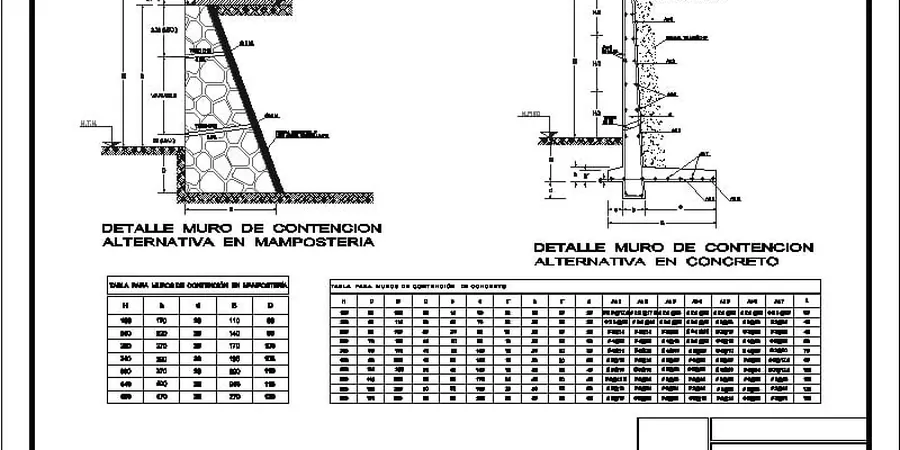
For walls up to 4 m high using reinforced concrete or masonry. We size the base width, check overturning and sliding, and specify drainage details. Suitable for residential subdivisions and commercial sites in the Ballarat flat.
Anchored and reinforced soil wall design
For taller walls or constrained sites where a gravity wall won't fit. We design tieback anchors, soil nails, or geosynthetic-reinforced walls. We verify the bond length in the stiff clay and the corrosion protection for steel elements.
Q&A
What soil conditions affect retaining wall design in Ballarat?
Ballarat soils are mostly residual and transported clays derived from basalt and sedimentary rock. They are stiff when dry but soften significantly when wet. The high plasticity (PI often above 30%) means the active earth pressure can exceed Rankine values if swelling is not accounted for. We measure su and φ' directly from borehole samples and use those numbers in the design.
Do I need a geotechnical report for a retaining wall in Ballarat?
Yes, for any wall over 1 m high or supporting a structure. Council typically requires a design certificate based on site-specific soil parameters. A report from a NATA-accredited lab covers the soil classification, shear strength, groundwater conditions, and the design assumptions per AS 4678.
How much does retaining wall design cost in Ballarat?
For a standard residential wall (2-3 m high, 20-30 m long) the geotechnical design and reporting typically ranges from AU$1.380 to AU$7.030 depending on the number of boreholes and laboratory tests required. Larger commercial walls or those needing anchored systems are at the upper end.
What drainage system is needed behind a retaining wall?
A properly designed drainage blanket of 20 mm aggregate wrapped in geotextile, connected to a perforated pipe at the base. The pipe should daylight or connect to a stormwater pit. In Ballarat clay, we also add a 300 mm wide granular zone behind the wall to intercept seepage before it reaches the clay.
Can I build a retaining wall on a sloping block in Ballarat?
Yes, but the wall must be stepped or battered to follow the natural slope, and the global stability of the entire slope must be checked. We often use reinforced soil walls or anchored systems on steep slopes to reduce the excavation volume. A slope stability analysis is mandatory for slopes steeper than 1:2.