Ground improvement in Ballarat encompasses a suite of geotechnical engineering techniques designed to enhance the load-bearing capacity, settlement characteristics, and overall stability of soils that are otherwise unsuitable for construction. This category covers methods ranging from mechanical reinforcement, such as stone column design, to chemical stabilisation processes like lime and cement stabilization. In a city experiencing steady urban expansion and infrastructure renewal, these interventions are critical for transforming problematic ground into reliable founding strata, enabling safe and cost-effective development on sites that would traditionally be bypassed.
Ballarat's geological profile presents distinct challenges that make ground improvement essential. Much of the city is underlain by Tertiary and Quaternary sediments, including alluvial silts, soft clays, and variably dense sands deposited by ancient river systems. Basaltic clays derived from weathered volcanic rocks are widespread, often exhibiting high plasticity and shrink-swell potential. These conditions can lead to excessive total and differential settlement, low shear strength, and poor drainage. Additionally, historical gold mining activity has left behind unconsolidated fill, abandoned shafts, and variable subsurface conditions that demand thorough investigation and tailored improvement strategies to mitigate collapse risk.
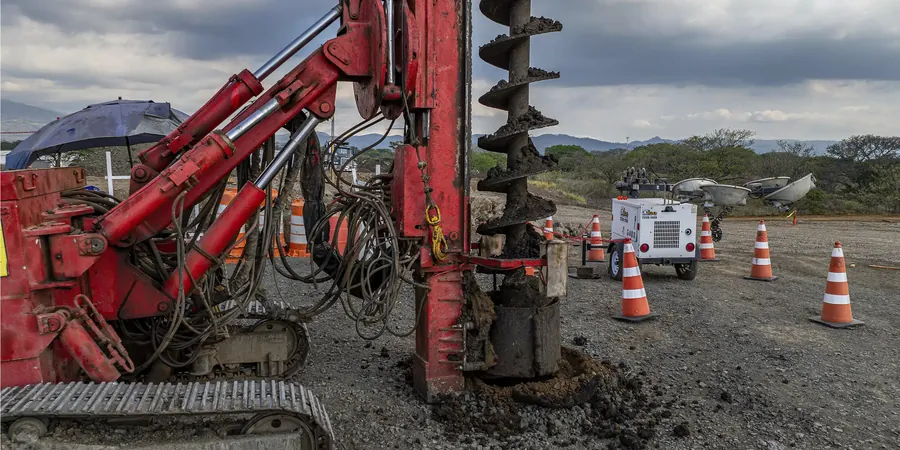
All ground improvement works in Ballarat must comply with the National Construction Code (NCC) and relevant Australian Standards, most notably AS 4678 for earth-retaining structures, AS 3798 for site investigation and earthworks, and AS 2159 for piling design and installation. Projects involving deep mixing or grouting also fall under the guidance of AS 1289 for soil testing methods. Local council requirements, including Environment Protection Authority (EPA) Victoria guidelines for soil contamination and groundwater management, further shape the design and execution of improvement schemes. Adherence to these frameworks ensures that all techniques meet stringent performance and environmental benchmarks.
A wide range of projects across Ballarat benefit from these specialist services. Residential subdivisions on marginal land often require preloading design to accelerate settlement before construction. Commercial and industrial developments on soft alluvial deposits commonly utilise deep soil mixing or jet grouting design to create stiff soil-cement columns for foundation support. Infrastructure upgrades, including road embankments and bridge approaches, frequently incorporate preloading with surcharge design or stone columns to control long-term settlement. Drainage-sensitive sites leverage geotechnical drainage design to manage pore water pressures and enhance the effectiveness of other treatments. Selecting the right method depends on soil conditions, loading requirements, and project timelines, underscoring the value of integrated geotechnical assessment.
Available services
Deep Soil Mixing (DSM) design
→ Ver detalleGeotechnical drainage design
→ Ver detalleGrouting design
→ Ver detalleJet grouting design
→ Ver detalleLime and cement stabilization
→ Ver detallePreloading design (without surcharge)
→ Ver detallePreloading with surcharge design
→ Ver detalleStone column design
→ Ver detalleVibrocompaction design
→ Ver detalleCommon questions
What types of soil problems does ground improvement address in Ballarat?
Ground improvement targets soft clays, loose sands, uncontrolled fill, and shrink-swell soils common in Ballarat's alluvial and volcanic geology. It mitigates excessive settlement, improves bearing capacity, enhances slope stability, and reduces liquefaction risk, making otherwise unsuitable sites viable for residential, commercial, and infrastructure projects.
How do I choose the right ground improvement method for my Ballarat project?
Selection depends on soil profile, load requirements, settlement tolerances, and site constraints. A thorough geotechnical investigation is essential. Options like stone columns suit soft clays, while deep soil mixing or jet grouting works well for mixed strata. Preloading is effective where time permits, and lime stabilisation addresses reactive clays.
What Australian Standards govern ground improvement in Ballarat?
Key standards include AS 4678 for retaining structures, AS 3798 for earthworks and site investigation, AS 2159 for piling, and AS 1289 for soil testing. Compliance with these, along with NCC requirements and EPA Victoria guidelines, ensures all designs meet safety, durability, and environmental obligations.
How long does ground improvement take to complete?
Duration varies widely by method and site scale. Preloading with surcharge may require months of consolidation monitoring, while grouting or deep soil mixing can be completed in weeks. A design tailored to project timelines and settlement targets is critical to balancing speed with long-term performance.