In Ballarat, the legacy of gold mining has left a landscape of deep open cuts, mullock heaps, and reworked fill slopes that can shift gradually for decades. Many of these old workings sit directly behind suburban backyards or alongside rural access roads. Monthly geotechnical slope monitoring in Ballarat gives property owners and councils a reliable record of whether a face is creeping, accelerating, or holding steady. Instead of waiting for a crack to appear in a driveway, the monitoring picks up sub‑millimetre movement at survey prisms and inclinometer casings. When we combine that data with a stability analysis that factors in local geology, we can forecast when a slope might need intervention. For sites where water build‑up is the main trigger, measuring pore pressure with vibrating‑wire piezometers at the same monthly interval tells us if drainage improvements are actually working or if the groundwater table is rising again.
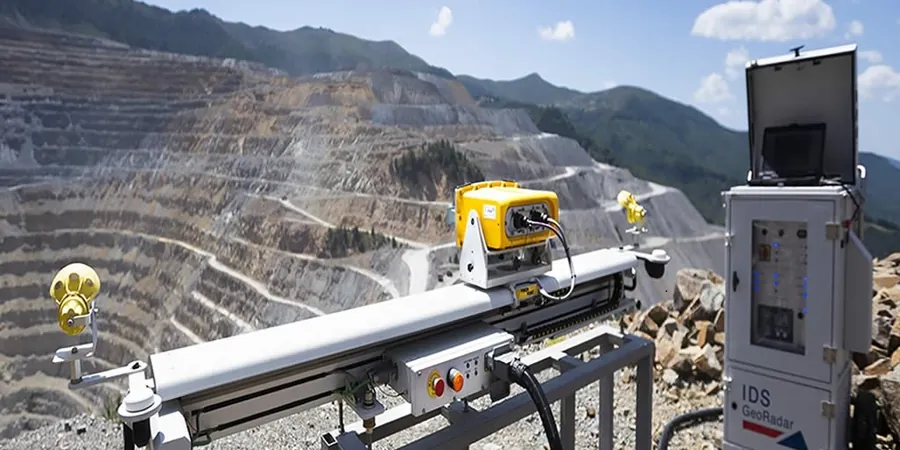
Monthly inclinometer readings can detect slope creep as small as 0.5 mm, allowing intervention before a slow slide becomes a costly failure.
Technical details of the service in Ballarat
Typical technical challenges in Ballarat
Ballarat sits on Ordovician bedrock overlain by deep clay‑rich colluvium and old gold‑rush tailings. The clays are typically high‑plasticity with low drained shear strength when saturated. After heavy winter rain, the pore pressure in these layers can double within a week, reducing effective stress along the failure plane. If monthly monitoring stops during winter, you can miss the moment when creep accelerates into a full slide. Another risk is that survey prisms get knocked by stock or machinery, creating a false reading. That is why our field team checks each monument physically and re‑establishes any damaged targets within the same monthly cycle, so the dataset stays continuous and reliable for trend analysis.
This service complements our laboratory testing work for a complete project analysis.
Our services
We offer four complementary monthly monitoring services tailored to different slope types and risk levels around Ballarat.
Inclinometer casing & probe survey
Permanent inclinometer casing installed through the slip plane, read monthly with a biaxial probe to produce depth‑vs‑displacement profiles.
Surface prism network
Set of 10–30 survey prisms mounted on concrete monuments, read by total station to track 3D surface movement across the slope face.
Piezometer & rainfall correlation
Vibrating‑wire piezometers logged at the same monthly visit, correlated with BOM rainfall data to identify pore‑pressure thresholds.
Crack‑gauge & visual inspection
Manual crack‑width gauges installed on tension cracks, combined with photographic records and geomorphic observations each month.
Q&A
How much does monthly geotechnical slope monitoring in Ballarat cost?
For a typical slope with 3–5 inclinometer casings and 10 prisms, monthly monitoring ranges between AU$660 and AU$1,980 per visit including data processing and a report. The total depends on access difficulty, number of instruments, and travel distance from Ballarat CBD.
How long should I continue monthly monitoring before reducing frequency?
We recommend at least 12 consecutive months of monthly data to establish a seasonal baseline. If after that period the cumulative displacement stays below 5 mm and shows no acceleration, we can discuss switching to quarterly readings.
What happens if the monitoring detects sudden acceleration?
If the movement rate exceeds 5 mm per month or doubles between consecutive readings, we issue an immediate alert with a preliminary assessment. The next step is usually an emergency site inspection and, if needed, temporary drainage or load‑reduction measures before the next monthly cycle.
Can monthly monitoring replace a full geotechnical investigation?
No. Monthly monitoring is a surveillance tool, not a substitute for a site investigation. You still need boreholes, laboratory testing, and a stability analysis to define the failure mechanism. Once those are complete, monitoring validates the design assumptions and tracks performance over time.
Do you install the monitoring equipment yourself?
Yes. Our field crew drills and grouts inclinometer casing, mounts prisms on concrete pedestals, and installs piezometers in dedicated boreholes. All equipment is sourced from certified suppliers and calibrated before installation.