Ballarat sits on a mix of basalt flows, alluvial clays, and weathered sedimentary rock – a legacy of its volcanic history and gold-mining past. This geological patchwork means slope stability analysis here isn't a one-size-fits-all exercise. A cut through basalt behaves differently than one through the soft clays that fill old creek lines. Our team models each scenario using limit-equilibrium methods (Bishop, Morgenstern-Price) and checks against AS 4678:2002 for earth-retaining structures. For projects on steep residential lots or near the Yarrowee River corridor, we often pair this study with monitoreo de taludes to track movement during construction. The goal is a factor of safety that matches the consequences of failure – higher for occupied buildings, lower for temporary cuts.
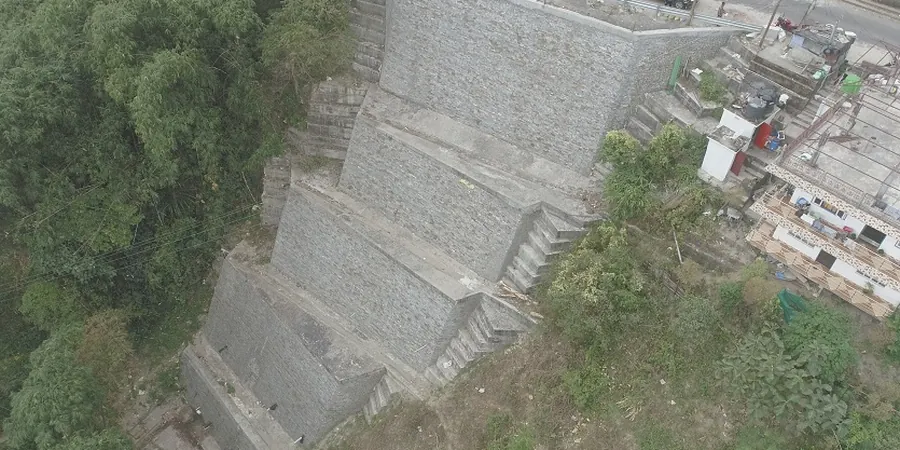
One in three slope failures in Ballarat's clay fills occurs during or immediately after a heavy winter rain event, not during excavation.
Technical details of the service in Ballarat
- Field survey of slope geometry, vegetation, and seepage signs
- Classification of soil/rock units per AS 1726:2017
- Shear-strength testing (direct shear or triaxial) on undisturbed samples
- Seepage analysis for perched water tables common in Ballarat's clay subgrades
Typical technical challenges in Ballarat
A recent subdivision near Buninyong required a 6-metre cut into a basalt slope to create building platforms. The initial design assumed a uniform rock mass. But once excavation exposed a clay seam at 4 metres, the stability analysis showed a factor of safety below 1.2. The contractor had to install rock anchors and a drainage blanket before proceeding. This is the kind of scenario we see regularly in Ballarat: the geology looks competent on the surface but holds hidden weaknesses. A thorough slope stability analysis early in design avoids those mid-construction surprises and keeps the project on schedule.
Our services
We offer a full suite of slope stability services tailored to Ballarat's ground conditions. Each study is scoped to the site's complexity and the project's risk profile.
Cut-slope stability for residential subdivisions
Analysis of temporary and permanent cuts in basalt, clay, or fill. Includes field logging, shear-strength testing, and limit-equilibrium modeling. Delivered as a report with recommended batter angles and drainage measures.
Fill embankment stability for roads and rail
Evaluation of compacted fill slopes along the Western Freeway or local roads. We assess foundation bearing capacity, seepage conditions, and long-term settlement that could reduce the factor of safety.
Landslide risk assessment for existing slopes
Site inspection and back-analysis of failed or distressed slopes. We identify failure mechanisms (rotational, translational, or wedge) and recommend remedial works such as soil nails, shotcrete, or subsoil drains.
Q&A
What is the typical cost of a slope stability analysis in Ballarat?
For a standard residential site with one cut slope, expect between AU$2,030 and AU$3,500. A larger commercial or infrastructure project with multiple sections and seepage modeling can range from AU$3,800 to AU$6,370. The final price depends on site access, number of boreholes, and testing requirements.
How deep do boreholes need to be for slope stability analysis?
We generally drill to at least 1.5 times the slope height below the toe, or until refusal on competent bedrock. In Ballarat's basalt areas, refusal can come quickly, but in the alluvial clays of the lowlands we may need to go 6 to 10 metres to reach a stable stratum.
What factor of safety does AS 4678 require for permanent slopes?
AS 4678:2002 recommends a minimum factor of safety of 1.5 for permanent slopes under static conditions, and 1.3 for temporary excavations. For slopes near existing structures or with high consequences of failure, we often target 1.5 even for temporary works.
How long does a slope stability study take from start to finish?
A typical study for a single slope takes 2 to 3 weeks. This includes field work (boreholes or test pits), laboratory testing of soil samples, modeling, and report writing. More complex sites with multiple slopes or seepage issues can take 4 to 6 weeks.
Do you provide recommendations for slope remediation if the analysis shows a low factor of safety?
Yes. Our reports include specific remedial options such as flattening the slope, installing subsurface drainage, adding soil nails or rock anchors, or using reinforced soil slopes. We also provide construction specifications to ensure the remedy is implemented correctly on site.