Ballarat’s inland climate, with winter temperatures dropping below 2°C and summer heatwaves exceeding 40°C, drives deep wetting-drying cycles in the local clay profiles. These seasonal changes directly affect the undrained shear strength of the soil. That’s why we run triaxial tests on undisturbed samples taken from across the Ballarat region, simulating the stress paths that foundations and pavements will actually experience. For projects on the basalt-derived clays west of the city centre, we combine the triaxial test with an excavation monitoring program to track pore pressure changes during construction. The results feed directly into bearing capacity checks and settlement estimates, giving the design team numbers they can trust.
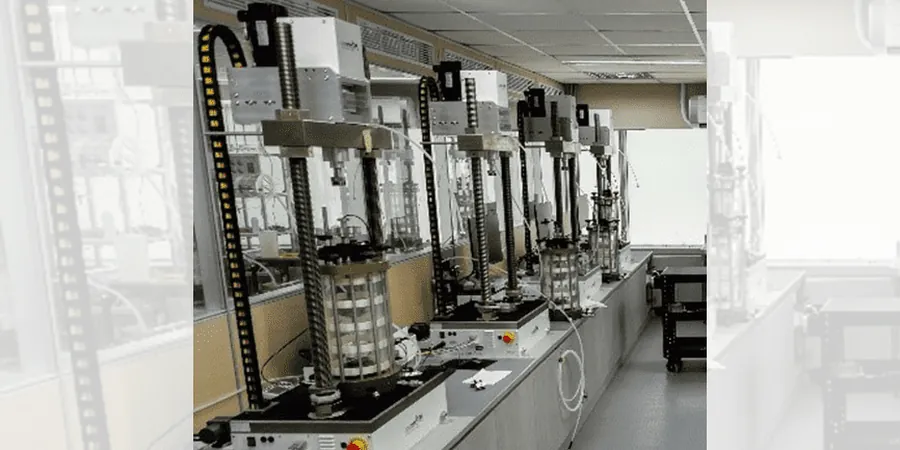
Seasonal wetting cycles in Ballarat's clay profiles can reduce undrained strength by up to 30%, making triaxial testing essential for reliable foundation design.
Technical details of the service in Ballarat
Typical technical challenges in Ballarat
We worked on a three-storey commercial development in Ballarat’s CBD where the geotechnical report relied on index tests alone. During excavation for the lift pit, the contractor hit a wet clay layer that softened within hours. The slab design had assumed an undrained strength of 80 kPa; the triaxial test on that exact layer returned 45 kPa. That single number forced a redesign of the footing depth and a drainage blanket. Had the triaxial test been done before tender, the contractor would have priced the temporary works correctly and avoided a two-week delay.
This service complements our laboratory testing work for a complete project analysis.
Our services
We offer a full suite of triaxial testing services tailored to Ballarat’s geology, from residential footings to large subdivisions.
UU Triaxial (Unconsolidated-Undrained)
Quick assessment of undrained shear strength for immediate bearing capacity calculations. Ideal for clay sites where rapid construction loading is expected.
CU Triaxial (Consolidated-Undrained) with Pore Pressure
Provides effective stress parameters (c', φ') for long-term slope stability, retaining wall design and excavation support. Includes pore pressure dissipation monitoring.
Multi-Stage Triaxial
Single specimen tested at three confining pressures, reducing sample disturbance effects. Suitable for stiff clays where undisturbed block samples are difficult to obtain.
Q&A
What is the difference between UU and CU triaxial tests, and when should I use each in Ballarat?
UU tests give you undrained strength parameters (Su) for short-term loading conditions, such as during construction or immediately after placing a footing. CU tests with pore pressure measurement provide drained strength parameters (c', φ') for long-term design like retaining walls, embankments or excavations where water pressures may change over time. For most Ballarat clay sites, we recommend CU for permanent works and UU for temporary works.
How much does a triaxial test cost in Ballarat?
The typical cost for a triaxial test in Ballarat ranges between AU$2.760 and AU$3.700 per test, depending on the test type (UU, CU or CD) and the number of confining stages. Bulk rates apply for projects requiring 10 or more tests. This price includes sample preparation, saturation, shear and a certified test report.
Do you test samples from deep boreholes or only shallow block samples?
We test both. Block samples taken from test pits or shallow excavations are trimmed to 100 mm diameter for UU or CU testing. For deeper boreholes, we use thin-walled tube samplers (typically 50 mm or 75 mm) and run the triaxial test directly on the extruded sample. The confining stress is set to match the in-situ overburden pressure at the depth of recovery.