Ballarat sits at about 440 metres above sea level, and its volcanic plains are underlain by basalt and clay-rich soils. These conditions mean that any retaining wall project demands a thorough understanding of the ground. We approach MSE (mechanically stabilized earth) wall design in Ballarat by first characterizing the in-situ material: its classification, compaction potential, and drainage behaviour. A common first step is a classification of soils to determine the fraction of fines and the plasticity index, which directly influence the reinforcement layout. Our team has run dozens of projects across the Ballarat region, so we know how the local geology interacts with geogrids and wrapped-face systems.
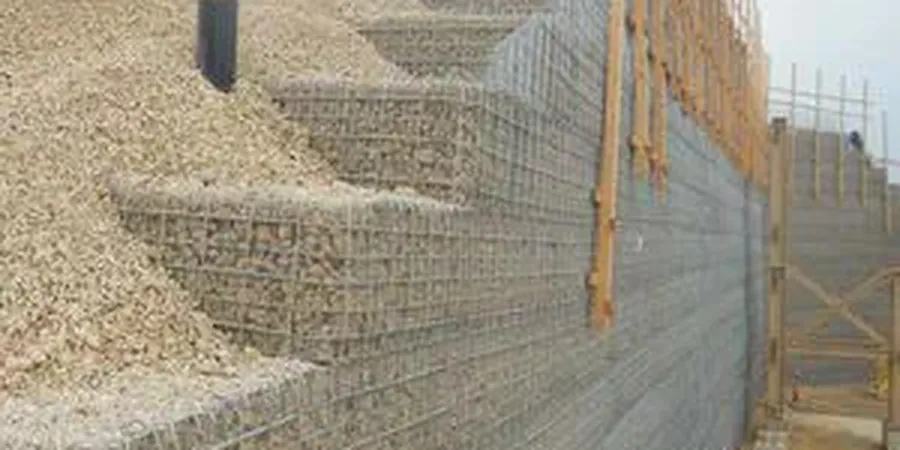
For MSE wall design in Ballarat, we run direct shear tests on the backfill under saturated conditions, following AS 4678-2002.
Technical details of the service in Ballarat
Working video
Typical technical challenges in Ballarat
Ballarat's rainfall averages roughly 700 mm per year, concentrated in winter and spring. That water can saturate the backfill behind an MSE wall and reduce the effective stress on the reinforcement. If the drainage system isn't designed correctly, pore pressures build up and the facing bulges. We've seen several cases where a wall failed during a wet winter because the drainage blanket was undersized. For MSE wall design in Ballarat, we always specify a drainage layer behind the facing and check the internal stability under both static and seismic conditions. The risk is manageable, but only if the soil parameters are measured, not guessed.
Our services
We offer a complete set of services to support MSE wall design in Ballarat, from initial soil characterization to final quality control.
Soil classification & index tests
Determination of grain size, Atterberg limits, and moisture-density relationship to classify the backfill material per AS 1726.
Direct shear & pullout testing
Shear strength parameters under saturated and drained conditions, plus geogrid pullout resistance to verify reinforcement bond.
Compaction control & field density
On-site nuclear densometer or sand-cone testing to ensure the backfill achieves the specified relative compaction.
Stability analysis & design review
Limit equilibrium and finite-element modelling of internal and external stability, including seismic checks per AS 4678.
Q&A
What soil parameters are most critical for MSE wall design in Ballarat?
The friction angle and cohesion of the compacted backfill are the most important, because they control the bond between the soil and the geogrid. In Ballarat's basalt-derived soils, we also pay close attention to the fines content and plasticity index, since dispersive clays can reduce pullout resistance over time.
How does Ballarat's seismic zone affect MSE wall design?
Ballarat is classified under AS/NZS 1170.4 as a moderate seismic zone, so the wall must resist horizontal accelerations from an earthquake. This increases the required reinforcement length and strength, especially for walls taller than 5 metres. Our lab includes seismic coefficients in the stability analysis to ensure the wall remains stable under design-level shaking.
What is the typical cost range for MSE wall design in Ballarat?
The geotechnical component typically ranges from AU$1.850 to AU$6.830 depending on the wall height, number of borings, and testing scope. This covers soil classification, shear testing, and stability analysis, but excludes the structural design of the facing panels.
Can I use on-site fill for an MSE wall in Ballarat?
It depends on the material's classification. Many on-site soils in Ballarat contain too many fines or have high plasticity, which reduces drainage and bond. We test a representative sample first — if the fines content exceeds 15% or the plasticity index is above 20%, you'll likely need imported granular fill.
How do you verify the geogrid pullout resistance during construction?
We perform field pullout tests on the installed geogrid at the specified embedment length. The test measures the force required to pull the grid out of the compacted fill, and the result is compared to the design value. This is a quality-control step that confirms the reinforcement is working as intended.