Ballarat's climate, with around 700 mm of annual rainfall and cool winters, creates a seasonal moisture cycle that challenges subgrade stability. The local volcanic and sedimentary soils, particularly the clay-rich layers derived from basalt and alluvial deposits, are prone to swelling and shrinkage when wet. In our experience, treating these materials with lime and cement stabilization is the most reliable way to control plasticity and improve load-bearing capacity before placing pavement or shallow foundations. We always pair this treatment with a classification of soils to confirm the clay mineralogy, and a plate load test after curing to verify the design modulus.
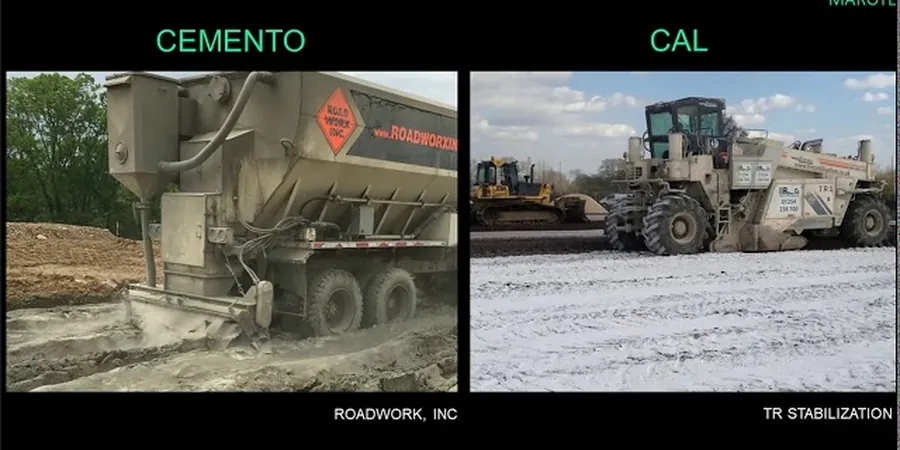
On Ballarat's basaltic clays we've seen plasticity indices drop from 35 to below 12 after a single lime stabilization pass.
Technical details of the service in Ballarat
Typical technical challenges in Ballarat
The main risk in Ballarat is underestimating the reactivity of the clay. In the Wendouree and Lake Gardens areas, the clay can have a linear shrinkage above 12%, which means untreated subgrade heaves or cracks pavement within two years. On the other side, in the northern suburbs like Miners Rest, the soil profile includes sandy loam over basalt — here cement stabilization works better than lime because the pozzolanic reaction is more reliable. The worst case we've seen is a failed lime treatment on a road project where the contractor didn't mellow the lime for enough time before compaction, leaving lumps of untreated clay that later softened. Proper mixing depth and mellowing period are non-negotiable.
Our services
We cover the full cycle of stabilization work in Ballarat, from soil sampling and laboratory mix design to field quality control.
Laboratory Mix Design for Stabilization
We determine the optimum lime or cement content for your specific Ballarat soil through Atterberg limits, compaction curves, and unconfined compressive strength tests. The results include a recommended dosage, expected CBR, and curing schedule.
Field Quality Control and Verification Testing
After placement, we run in-situ density tests, check mixing depth, and soak CBR samples from the treated layer. We also perform plate load tests to confirm the design modulus before the next pavement layer goes on.
Q&A
How much does lime and cement stabilization cost in Ballarat?
For a typical road or residential slab subgrade in Ballarat, the cost range is AU$1,480 to AU$4,170, depending on the area treated, depth of treatment, and whether lime or cement is specified. This includes laboratory mix design, field application supervision, and verification testing.
How long does the stabilization treatment take to cure?
Lime-treated clays require a mellowing period of 24 to 48 hours before final mixing and compaction. Cement-treated soils set faster and can be compacted within two hours of mixing. Full strength gain takes 7 to 14 days, after which we perform the verification tests.
Can I stabilize the soil myself to save money?
We strongly advise against it. Incorrect dosage, poor mixing depth, or inadequate mellowing leads to soft spots, cracking, and pavement failure. We've seen projects in Ballarat where a DIY approach caused more damage than the original soil. The cost of rework far exceeds the professional service fee.