Around Ballarat, the varied geology of the Western Volcanic Plains means subgrade conditions can shift abruptly from basalt-derived clays to alluvial silts within the same road alignment. We see many projects where standard pavement designs fail because the design CBR was assumed rather than measured. Our approach starts with a detailed site investigation that combines test pits, dynamic cone penetrometer surveys, and undisturbed sampling to capture the real variability. Before specifying pavement layers, we run CBR testing on soaked and unsoaked samples to confirm bearing capacity, and we correlate those results with plate load tests when working on critical road sections or heavy-haul pavements. This data-driven process avoids the common trap of over-designing one segment while under-designing another.
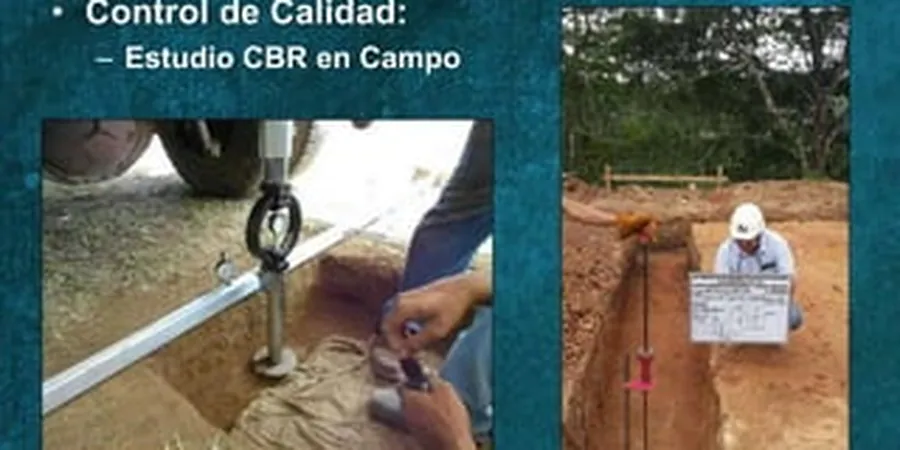
Subgrade variability across Ballarat's volcanic plains means a single design CBR value can misrepresent actual pavement performance by more than 40 percent.
Technical details of the service in Ballarat
Typical technical challenges in Ballarat
A recurrent error we see on Ballarat road projects is treating all subgrade as homogeneous basalt clay. The reality includes lenses of alluvial sand in the Yarrowee River corridor and colluvial deposits on steeper sections near Buninyong. When a contractor builds pavement directly on a high-plasticity clay without verifying the soaked CBR, the pavement can suffer differential heave within the first two years. Another common mistake is compacting fill to standard Proctor when the design assumes modified Proctor density, leaving the subbase under-compacted. Our road geotechnics service identifies these risks by mapping soil boundaries and running compaction trials before mass earthworks begin.
Our services
We deliver two core road geotechnics services tailored to Ballarat conditions, from initial subgrade assessment through to pavement layer design verification.
Subgrade Characterisation and CBR Testing
Detailed site investigation using test pits and boreholes to classify subgrade soils, measure in-situ moisture, and run soaked CBR tests at multiple compaction levels. We provide design CBR values with statistical confidence limits, not single-point estimates.
Pavement Material Evaluation and Compaction Control
Laboratory testing of proposed pavement materials including particle size distribution, Atterberg limits, modified Proctor compaction, and repeated CBR. Field verification with nuclear density gauge and DCP surveys during construction to ensure compliance with design assumptions.
Q&A
What is the typical design CBR range for subgrades in Ballarat?
Natural subgrades in Ballarat typically yield soaked CBR values between 3% and 7% for clay profiles, rising to 10–15% where basalt gravel or sandy colluvium is present. We always test at multiple locations because CBR can vary by a factor of three across a single road alignment.
How does frost action affect pavement design in Ballarat?
Ballarat experiences an average of 30 to 40 frost events per year, which can cause ice lens formation in silty subgrades. We evaluate the frost susceptibility of subgrade soils using the fines content and plasticity criteria from Austroads, and if needed recommend a capping layer of non-frost-susceptible granular material.
What laboratory tests are essential for subgrade evaluation?
The minimum set includes soaked CBR at 100% and 95% modified Proctor density, linear shrinkage, Atterberg limits, particle size distribution, and compaction curve determination. For reactive clays we also run shrink-swell index testing to AS 1289.7.1.1.
How much does a road geotechnics study for a local road cost in Ballarat?
For a standard local road project in Ballarat, the cost typically ranges between AU$1.190 and AU$5.780 depending on the number of test pits, laboratory testing scope, and site access conditions. This includes field investigation, laboratory analysis, and a design report with CBR recommendations.
What is the difference between soaked and unsoaked CBR for pavement design?
Soaked CBR simulates worst-case moisture conditions after the pavement is placed, accounting for water ingress through cracks or shoulders. Unsoaked CBR represents immediate condition. Australian practice requires soaked CBR for design because Ballarat subgrades can saturate during winter, reducing bearing capacity by 40% to 60%.